Friday, May 9, 2014

Ashu: a mother’s life of sacrifice, hope and perseverance

 by Lyn Bishop


Out of love for their children, some mothers in desperate situations give their children away to ensure their survival and in expectation that they will have a better future. Ashu, a Sauti Moja beneficiary, recently related how she, too, struggled with this choice for her four children ages 5 to 15 years and her young brother. She agreed that Sauti Moja share her story of hope and perseverance with you.
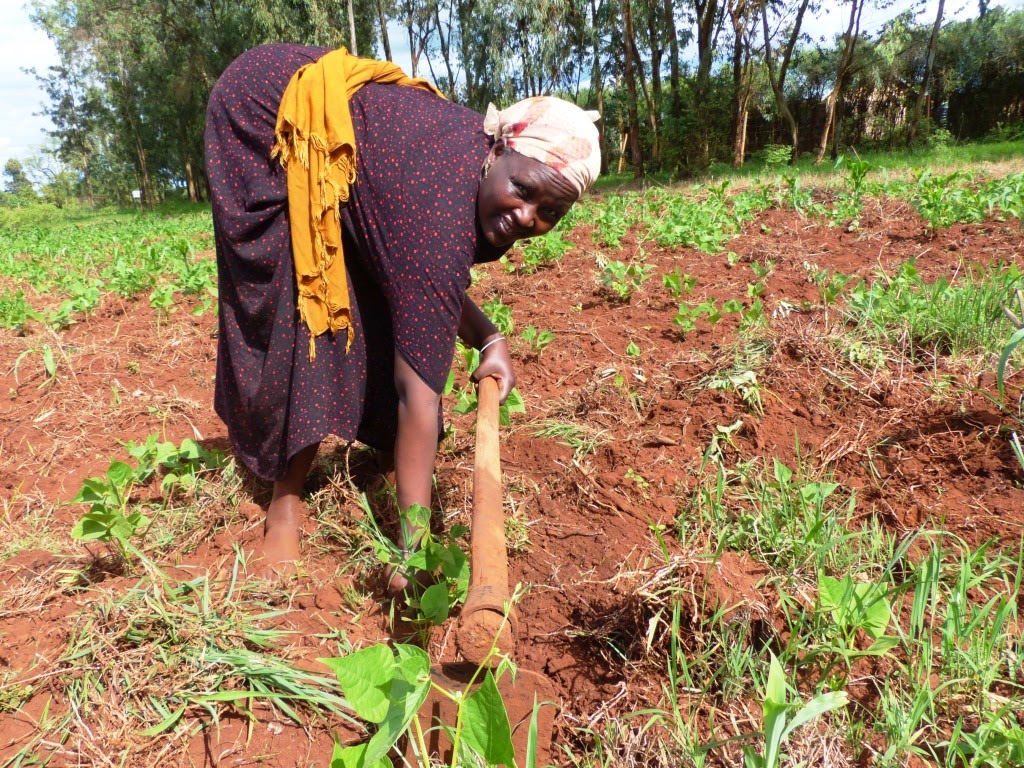
When Ashu’s husband abandoned her and the children, she was struggling to make ends meet with a small vegetable stand. Nevertheless, Ashu is hard-working, and she felt that, if she could find right situation, her hard work would eventually pay off. She decided to partner with a local business man, and together, they took a loan to start a larger vegetable shop. However, it wasn’t long after they signed for a loan that he disappeared with money. She found herself in a worse situation, with a business to run, a family to feed, and a big loan to pay.  
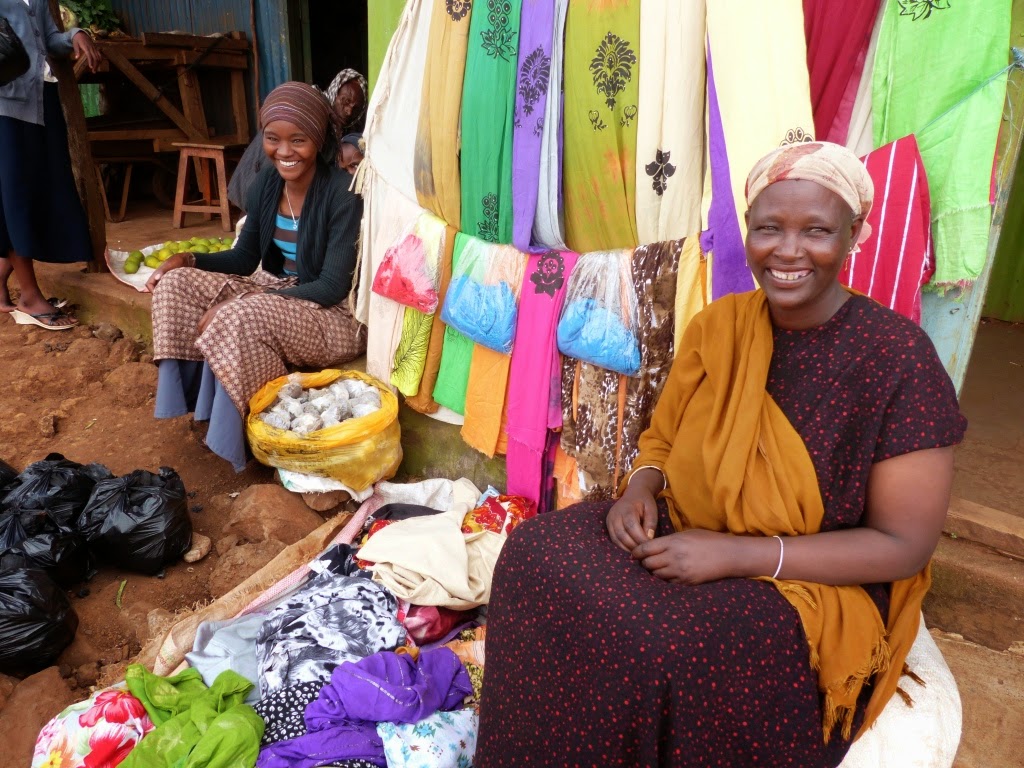
Ashu’s family was in dire straits; she owed so much money, and the family was uncertain about where they would find the next meal. Without government safety nets and food banks, NO money meant NO food!  Her children recalled many days when their mother went without food so that they could share the meager portions which she had been able to beg from neighbours. During these times of desperation and feelings of inadequacy and hopelessness, Ashu struggled with giving up and leaving her children with relatives. She didn’t!

Instead, Ashu continued with hard work and perseverance in spite of huge challenges in raising a large family as a single mom. She joined Sauti Moja Marsabit’s income generating activities in which women brainstorm and work together to create income for themselves. Ashu participates in soap making and farming activities. She also received a loan from SMM for a small open air stall that is outside a ‘proper shop’. Here, she sells, used clothing, shoes, charcoal and perfume, along with the soap and vegetables grown from participation in our program. 

I also interviewed two of Ashu’s daughters, who are so grateful that the family could stay together. Etenesh, the 13 year old daughter, says she knows her mother loves her, because she works so hard to make sure she has all she needs to attend school. (The cost of uniforms and books can be a heavy burden when so little income is coming into the household.)  Etenesh also remembers her mother going without food so they could eat.

When I asked Etenesh if she had any wish, what would she wish for, she responded, “I’d buy my mother a new house.”  And, what did Genet, Ashu’s 15 year old daughter, learn from watching her mother?  “Don’t lose hope, and hard work will see you through.” When I looked at this loving family, I knew that they draw strength from one another. 

Life is still challenging, but Ashu says that she has grown even stronger through the years. I asked, “What life lessons can you share with other mothers facing similar challenges?” Very simply, she stated, “Patience; patience in God, as he will offer a way out.”  

www.sautimoja.org

Sunday, April 27, 2014

HUNGER IS NO GAME - THANK YOU!

Thank you to all our donors who came forward and answered Sauti Moja Canada’s appeal for food aid.


 All mothers will go to great lengths to feed their children, however the widowed and single mothers who comprise Sauti Moja’s beneficiary community have additional challenges. 

The journey to find food can take mothers away from their home, leaving young children to fend for themselves.  Women walk many kilometers determined to find food by digging for roots and seeking food in other bomas (homesteads) and communities.  This activity of foraging for food and seeking help burns many calories – hopefully less than the mother gets to consume. 

However, food aid provides immediate calories and protein that is critical to reducing malnutrition and allows these single mothers to remain in their village and care for their children through the difficult times.

Sauti Moja Canada and our beneficiaries give thanks to the many donors who have responded.  To date, your donation enabled the bi-weekly distribution of 14kg maize, 2kg beans and 0.5L oil to assist 477 families in meeting their food needs.

Yes, Sauti Moja Canada will continue its appeal for food aid, while we  work to strengthen the community safety nets with further livestock distributions.   

Thank you!

http://www.sautimoja.org/Donations.html

Monday, November 25, 2013

Widows of Conflict; Women for Peace

In a remote area of northern Kenya, women widowed and impoverished by conflict between warring communities are an example of healing, reconciliation, and modeling of peace. This is changing the hearts and minds of both communities in ways that twenty years of peace initiatives by churches, agencies and politicians have not. No one thought that women victimized by violence between the Rendille and Borana communities would become powerful agents for peace.  

Rose, a widow of conflict before she became a woman for peace.
In response to the conflict between the Borana in Badasa and the Rendille in Songa, Sauti Moja implemented a pilot project that most leaders considered foolish. The new livestock bank would be made up of ten widows from each village, and in order to qualify for a livestock loan, each had to have had her husband killed and her livestock stolen by someone from the opposite village/tribe.  Further, they had to be willing to enter into a process of reconciliation and peace-making. This required courageous women who not only feared the ‘enemy’ but were willing to stand up against the distrust and revengeful attitudes of the neighbours and family that they often depended on for assistance. They also had a longing for the good old days of peace and friendship with those who had become the enemy. And, some saw that the conflict was evil; Daku, a Borana widow, said that peace could come “if we put God first, come together with enemies, forget the past, and forgive one another”.


A peace garden is one way that Sube communicates the
message of peace to her child and community.
In July 2012, the peace process was launched; women joined in setting up the livestock bank, participated in distribution of livestock, and were trained in livestock husbandry. Every month, these Muslim and Christian widows met with our Peace Coordinator to discuss their common pain and challenges, as well as learn about peace-making and reconciliation. Barriers were broken further, as they attended monthly training in child health and nutrition, family planning, and reproductive health. Trust was built, as they recognized that they were not really different, and as they openly talked about their feelings and attitudes. They realized the need to change their own language, especially with their children, from that of fear and hatred to that of peace and compassion.

Unexpectedly, our Women for Peace began to take the initiative. They formed peace gardens where women from both tribes worked together each Saturday. The women started going to each others’ villages to sell produce and each others’ homes to visit the sick, celebrate new life, or have tea. Widows began chastising neighbor women whose sons’ had stolen livestock and threatening to report this to the police, if the livestock were not returned. Rendille widows cajoled men from their tribe to help fight fire in the Borana grazing land; the next day, the Borana had a goat roast in honour and appreciation for unexpected help from the ‘enemy’. The women developed peace songs and dramas to present at local schools and in public meetings. They lobbied the Governor to help them revive their farms that had been disused for many years, and to provide security for them working the fields.  Soon, this good news began to spread, leading to Catholic Peace and Justice inviting a few widows to give their testimonies in another region with severe conflict and to the capital to tell their story of peace and reconciliation, nationally.  Neighbouring communities came asking these women to tell them how to have peace.

 Rendille and Borana women passed-on
their first female goat as a symbol of peace between them.
While this was impressive, many remained skeptical for, next to her children, the most prized possession of a pastoralist woman is her livestock. They are her prime source of food, income and wealth, and are key to social status and community acceptance. Our fear was that when it was time for Rendille women to give female goats to the Borana, and vice versa, the process would break down. How could a pastoralist give livestock to those who stole hers? Our fear was unfounded; on October 28th, all the widows gathered in the midst of the conflicted area where they sang songs of peace, and each one passed female goats to new widows from the other tribe. The most-critical stage of our peace process was successful, and with that there are now forty Widows for Peace.

At the meeting, the sheik praised the impact of these women. Because of their influence, men can walk between the villages at night. An old man told us that now he takes only a stick when herding his goats; there is no need to carry a weapon. When a Borana man was recently beaten and his three donkeys stolen, the Rendille elders punished the warriors, forcing them to return the donkeys and give the Borana man three cows; in the past, the warriors would have been praised. The Widows of Conflict are truly Women for Peace; transformed women now have transformed communities. 

For a video presentation of this peace initative please click on the following link:  Widows of Conflict; Women for Peace:          http://youtu.be/NZGfDqZdywc

Saturday, August 17, 2013

Peace-Making in Marsabit, Kenya

Widows of Conflict; Widows for Peace - Watch the 24 minute video and the moving testimonies of women who are taking their communities on a journey to peace.


Over the past couple of decades there has been a growing struggle between the Borana and Rendille in Marsabit County of Northern Kenya.  These conflicts have escalated around livestock raids; in fact, more than 250 people have been killed.  Sauti Moja has developed a methodology for peace by using the Community Livestock Banking (CLB), where widows pay off their livestock (4 goats & 1 donkey) loan by passing on the first female offspring to the next needy widow.  In the case of a Peace CLB we have identified 10 Rendille widows and10 Borana widows, whose husbands were killed and livestock taken by the other tribe.  These widows will pass-on their first female livestock offspring to widows from the other tribe.  The Borana widows pass-on to Rendille widows, and Rendille widows pass on to Borana widows.  These widows share their personal testimonies about their journey to a peace, that is now being celebrated throughout their tribal communities.

Invest in Peace www.sautimoja.org

Tuesday, June 18, 2013

KIDS4KIDS: Cross-Cultural Connections

In this short video clip, Tim Wright, founding Director of Sauti Moja, and Pat Kalpaca, a retired school teacher, present the value of the Longido Early Childhood Education Program and the attributes of the Kids4Kids initiative. 


 “A few years ago, Sarah, a Maasai lady who had retired from teaching, came to us asking for support for her vision, a vision of preparing Maasai children for formal education.  One of the issues for rural Maasai is that their children grow-up speaking Maa, but when they enter primary school, the language of instruction is Swahili.  Many children do not cope very well with this transition, from herding animals to entering formal schooling in another language.  They are not well-prepared to sit in a desk all day.  Further, many of the children are not well-nourished, and that is detrimental to learning.  Therefore, Sarah established a health program that includes nutritious lunches and medical check-ups.  The combination of Montessori pre-school and support of health development of children ensures that the children are prepared for formal education.”

“Recently Sauti Moja established the Kids4Kids initiative.  Kids4Kids is partly about supporting the school, but more than that it is about creating understanding among North American children about the lives of Masan children.”

Make a difference!  Subscribe for $20/month to support healthy development of a Maasai child, and contribute to cross-cultural learning for a child you love.

Sunday, June 16, 2013

A Donor's Pictorial Journey - Sauti Moja


 Duane and Joan McCartney visited Sauti Moja projects.  Amazed and moved by their experience, they created this video/pictorial account of their journey to East Africa where they discovered the beauty and the uniqueness of the indigenous cultures of Kenya and Tanzania.  Duane and Joan have agreed to share their remarkable journey.

When I asked what they would like to say to the Sauti Moja community, they responded by saying,
"Sauti Moja is REALLY making a difference in people's lives in Kenya and  Tanzania.  We highly recommend that you get financially involved with their various projects!"  
I guess you can't top that!  Consider this a formal invitation to enrich your lives and become engaged as a member of the Sauti Moja Community.


www.sautimoja.org

Friday, May 24, 2013

"It has happened to others before you.... "

By Grace Kossi, who is a young mother speaking of her experience as a 'child mother.

I am a young lady of 24 years, from a family of nine with four brother and two sisters.  My child was born when I was only 16 years of age, which caused me much misery, depression and frustration due to our cultural practice to make a girl an outcast, if she got pregnant before marriage.   I became a social misfit.


Grace with her daughter, Shalon, taken
today, May 25, 2013.

Because of my presence in my father’s home, he was no longer invited to attend meetings of elders or the community.  For my father, this was a negative judgment from the community and indicated that they had lost respect for my father, as he had not done the right thing and chased me from the house.   Life in my father’s home became harder and harder.  He was always angry, and my mother was always crying.

My mother remained forever hopeful for my success in life, because my father blamed her and accused her of destroying my life. Though the community blamed my father and my father blamed my mother, my beloved mother never blamed me.  She said, “It has happened to others before you, and God will help you out.”

As the days passed, stresses of all kinds surrounded my life.  I knew that I needed education to bring up my daughter, but it was all in vain.  As the stress grew, I developed ulcers that made me grow thinner and thinner until I reached 35kg (77 lb).

Grace has secured part-time work with Sauti Moja.
In a period of time between 2005 and 2006, I spent most days in bed due to sickness and depression.  During those days, I would dream a dream so sweet, but I didn’t understand it or take it seriously.  It was all about the success in my future.  First, I saw a tailoring machine, which was mine; second, I was on a computer typing; and third, I was in school.  The dream went on repeatedly until one day God opened the door of love, peace and prosperity.  A community-based organization, ‘Sauti Moja’, uplifted me from my life that I thought would never be good. 

Thanks to God, I am well again, and my daughter is a happy eight year old.  Although my daughter has been diagnosed with a hearing impairment, she is showing signs of improvement, since Sauti Moja arranged for a medical exam and hearing aids.  We continue to remain hopeful. 

Grace with her sponsor and
daughter, Shalon.
Today, I have completed Form 4 (Grade 12), Peace and Justice training, and completed a Certificate in Community Development and Social Work with the help of God and a Sauti Moja sponsor.  (Grace has expressed great appreciation for the support of the Anderson Family).  I am hoping to join a Diploma program in September.  My daughter and I are grateful for Sauti Moja and pray that God continues to bless their work and fulfill their mission of care and concern for poor and vulnerable widows and children.

Before, I was just nothing but an unwanted person in a community that would not recognize me.  Today,  I work part-time with Sauti Moja Marsabit and everyone is happy for my success!

I hope that one day I will be in a position to fight against demeaning cultural practices.  Every human-being has the right to live.  This is my advice to young ladies, “Life does not end when you have a pregnancy outside of marriage.  Avoid the situation as much as you can, but if it happens, don’t give up. Instead, pray that God will use well wishers or other means to secure your life.”